
How to describe a task so you get accurate price offers
A good description saves questions, misunderstandings and renegotiation. Here is what a provider needs to know before they can offer a fair price.

Why the description drives the price
A provider reading your task is trying to answer three questions: how long will it take, what do I need to bring, and is anything likely to cause trouble? The more of that is clear up front, the less the provider has to pad their price.
Vague tasks often end up priced high just in case – or lead to a discussion on site. Neither helps anyone.
Five things every description should include
- What needs doing – concretely. “Carry six moving boxes and a sofa from the third floor to a trailer” says more than “moving help”.
- Amount and size – number of items, rough dimensions or area.
- Conditions on site – floor, lift or stairs, distance to parking, tight passages.
- What you provide – tools, materials, trailer, cleaning products.
- Timing – when suits you and whether it is flexible.
Photos say more than words
A couple of pictures often carry more information than a long paragraph. Shoot in daylight, show the whole job and add a close-up of anything unusual – a narrow staircase, a heavy item or damage that needs fixing.
Avoid capturing personal details such as names on doors, post or screens.
Say what is not included
What should not be done matters as much as what should. Should removed items go to a recycling centre, or is carrying them out enough? Should assembled furniture also be put in place? Clear boundaries mean the price offer and the final agreement describe the same thing.
When something changes
If you realise the task is bigger than you thought, say so in the chat before work starts. On POFFIX an approved price never changes in chat; a changed scope needs a new price offer that both of you approve.
More guides

Checklist before moving and carrying help
Preparation decides whether moving day takes three hours or seven. A practical run-through of what you can do before help arrives.
Read the guide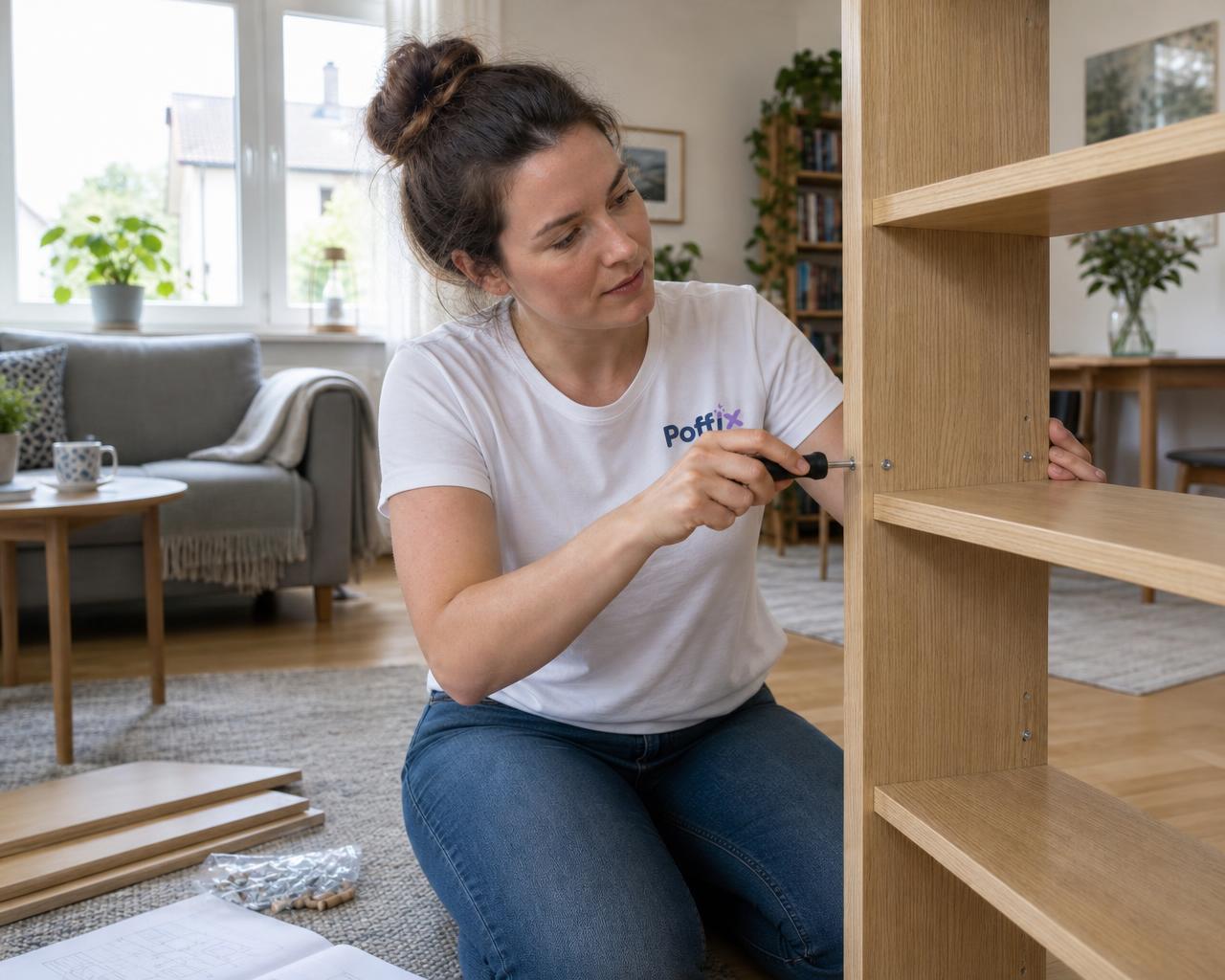
Flat-pack furniture: assembling smoothly and safely
Most assembly problems happen before the first screw. How to prepare – and how to know when it is time to ask for help.
Read the guide
Home and garden through the year – a simple seasonal plan
Most home and garden chores come back every year. A simple plan makes it easier to get help in time rather than at the last minute.
Read the guide